

Falling Pickaxe Demo: Free Play, No Account Needed
In short: The Falling Pickaxe demo runs on the maker's own site with 50,000.00 in play money. It opens in two clicks, asks for no account and no deposit, and runs the client we logged round by round.
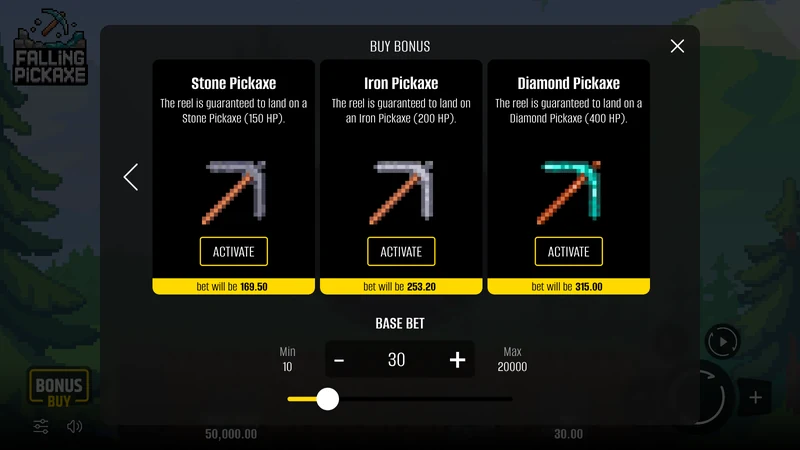
You get the complete game for nothing here, including the screen that prices the four bonus buys. What the demo withholds, like the rest of the client, is a return figure.
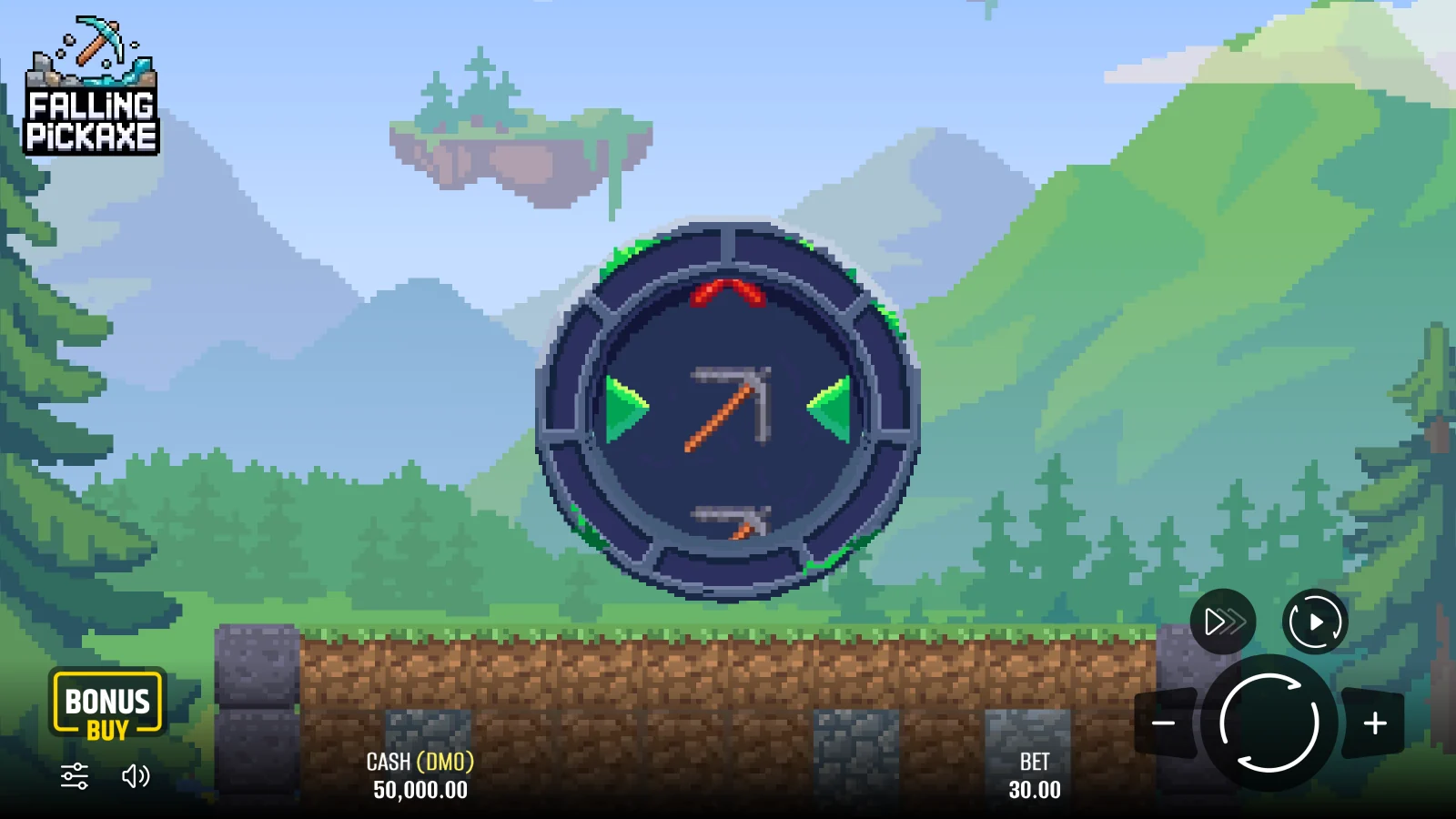
- Game:
- Falling Pickaxe (a Pixmove instant-win game)
- Type:
- Instant game
- RTP as published:
- 95%, printed on the maker's own game page, in its catalogue data and in its press release, and printed on no screen inside the game itself.
- Max win:
- 160 times the bet, which is what the maker's own game page and its catalogue data both print.
Table of contents
What the Free Demo Gives You
- Where it runs: Pixmove's own game page, which opens the client in a frame
- What it costs: Nothing. The balance is play money labelled DMO and cannot be cashed out
- Starting balance: 50,000.00
- Stake ladder: 15 steps from 10.00 to 20,000.00, with 30.00 selected by default
- Default stake: 30.00
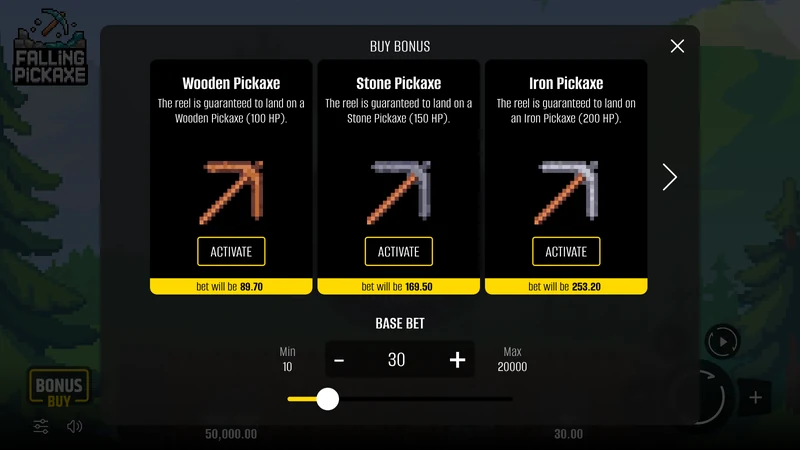
- Bonus buys available: All four, priced at 89.70, 169.50, 253.20 and 315.00 when the base stake is 30.00
- Autoplay: 10 to 1,000 rounds, plus an infinity option
- Account needed: None
- Age check before launch: None at all
- What is missing: Any return figure, any ceiling and any odds, on every screen
Read the demo as a tour of the mechanics, not as a test of the maths. The rounds it deals come from the maker's own game server, so the shapes you see are the game's own: the pickaxe tiers, the ore values, the eighth-round rule. What a short session cannot tell you is the long-run average, and nothing in the client tells you either.
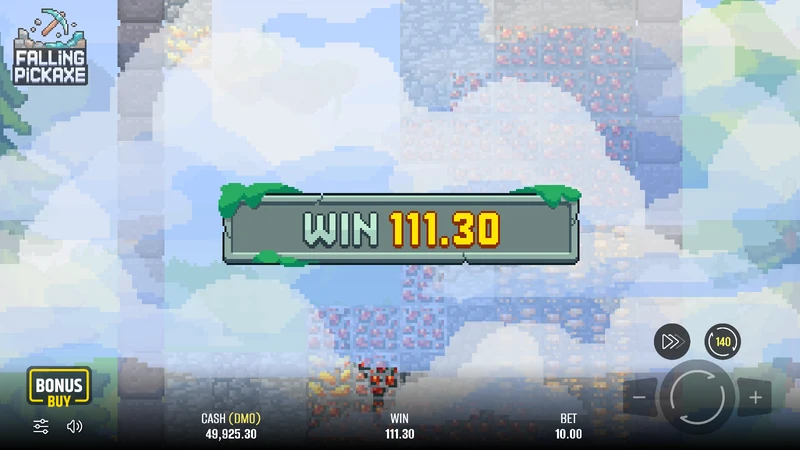
Our own run makes the point. We played 500 rounds at a 10.00 stake and finished with 92.0% of the money back. That is a measurement of one session, far too short a run to bear on the 95% Pixmove publishes. A handful of rounds decides a figure like that, and in our case one round paid 43.16 times the stake.
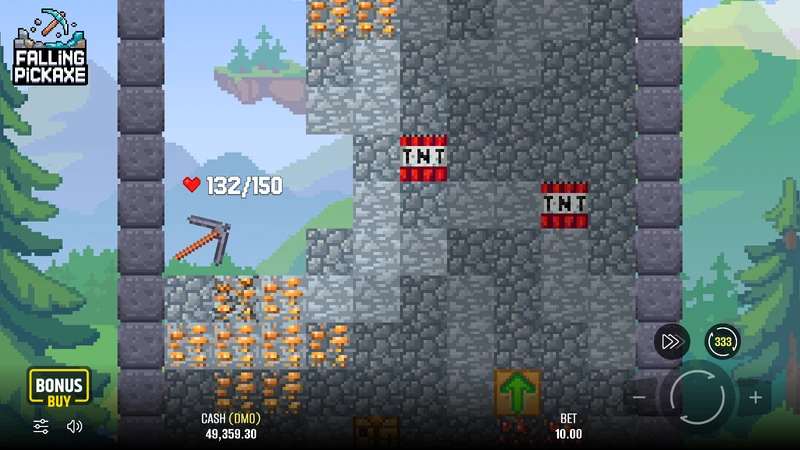
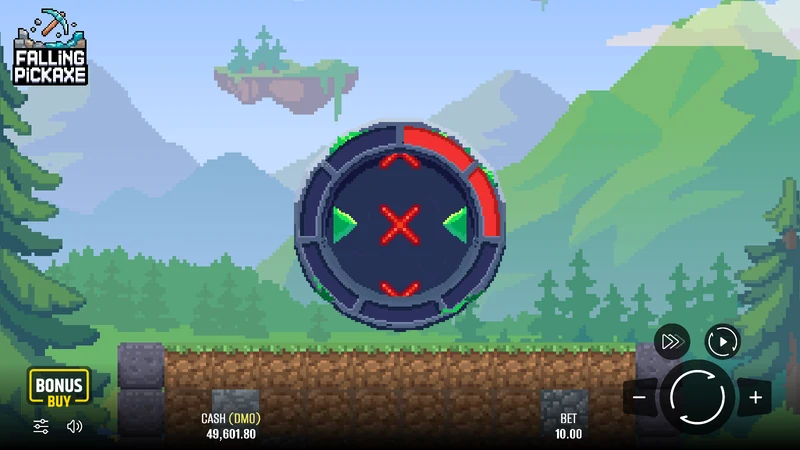
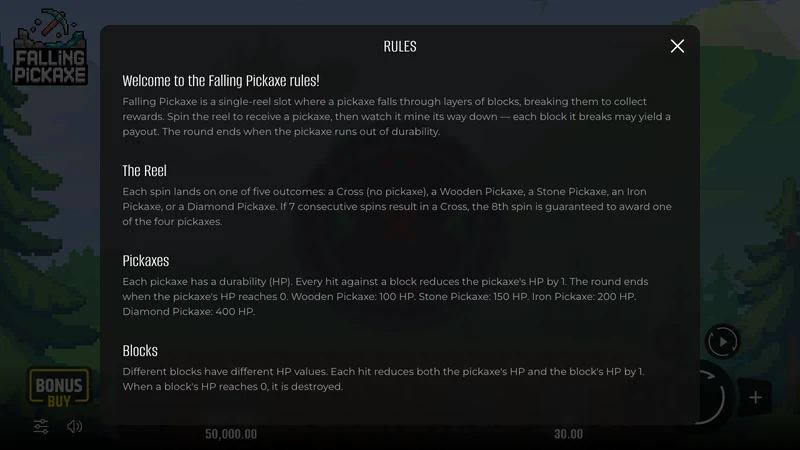
So use the demo for the questions it can answer. How often does a round pay nothing? In our logged 259, that was 76.1% of them. How big is a typical win? The median paying round gave back 0.52 times the stake. How long does your pickaxe last? Watch the durability counter, which starts at 100 on the Wooden tier and at 400 on the Diamond one.
Opening It in Two Clicks
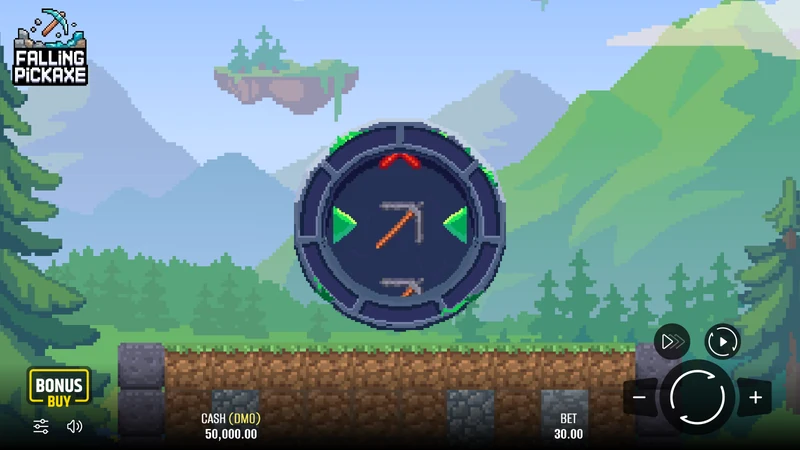
Go to the maker's game page and press PLAY DEMO. The client loads in a frame on that same page, and the balance is there before you have agreed to anything.
That is worth saying plainly, because it is unusual. Between a search result and a working gambling game sits the client itself: the age gate, the "I am 18" box and the warning screen are all absent. We went looking for one on the way in and found nothing of the kind.
Which Numbers the Demo Hides
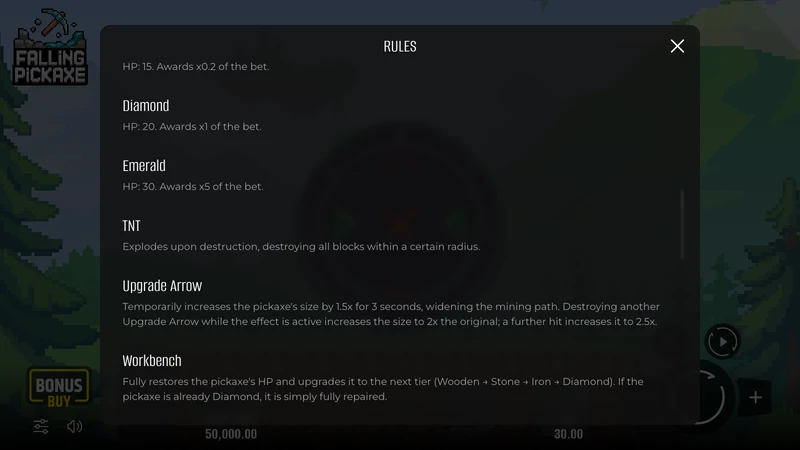
The demo hides every number about the odds, and it hides them behind one menu item, RULES. Open it and you get the mechanics in full: five reel outcomes, four durability values, seven block types with their payouts, and the three blocks that change a round instead of paying it.
| What we checked | What the demo gave us |
|---|---|
| Play balance on opening | 50,000.00 in a currency the client labels DMO |
| Account or deposit | Neither is asked for |
| Age confirmation | None is asked for before the client loads |
| Stake range offered | Fifteen steps from 10.00 to 20,000.00 |
| Bonus buy screen | All four doors, priced and buyable |
| A return figure anywhere | Not on one screen |
Read on ; the maker can change a screen without saying so.
The rules screen stops short of one thing: a number about the odds. No return, no ceiling, no hit frequency. We checked that three ways. The string table the client loads has 38 entries, and a return, a maximum and odds are absent from all of them. The launch reply from the game server names no ceiling and no return for the base game, though it does send 95% against each of the four bonus-buy doors, which no screen then prints. And the menu lacks a paytable and a history panel, although the shared code behind the game clearly supports both, because the labels for them sit unused in its string file.
Reading the Bet Panel
The bet panel leaves its own limits off, and one other screen carries them. Open BONUS BUY and the base-bet block at the bottom prints Min 10 and Max 20000 either side of the slider.
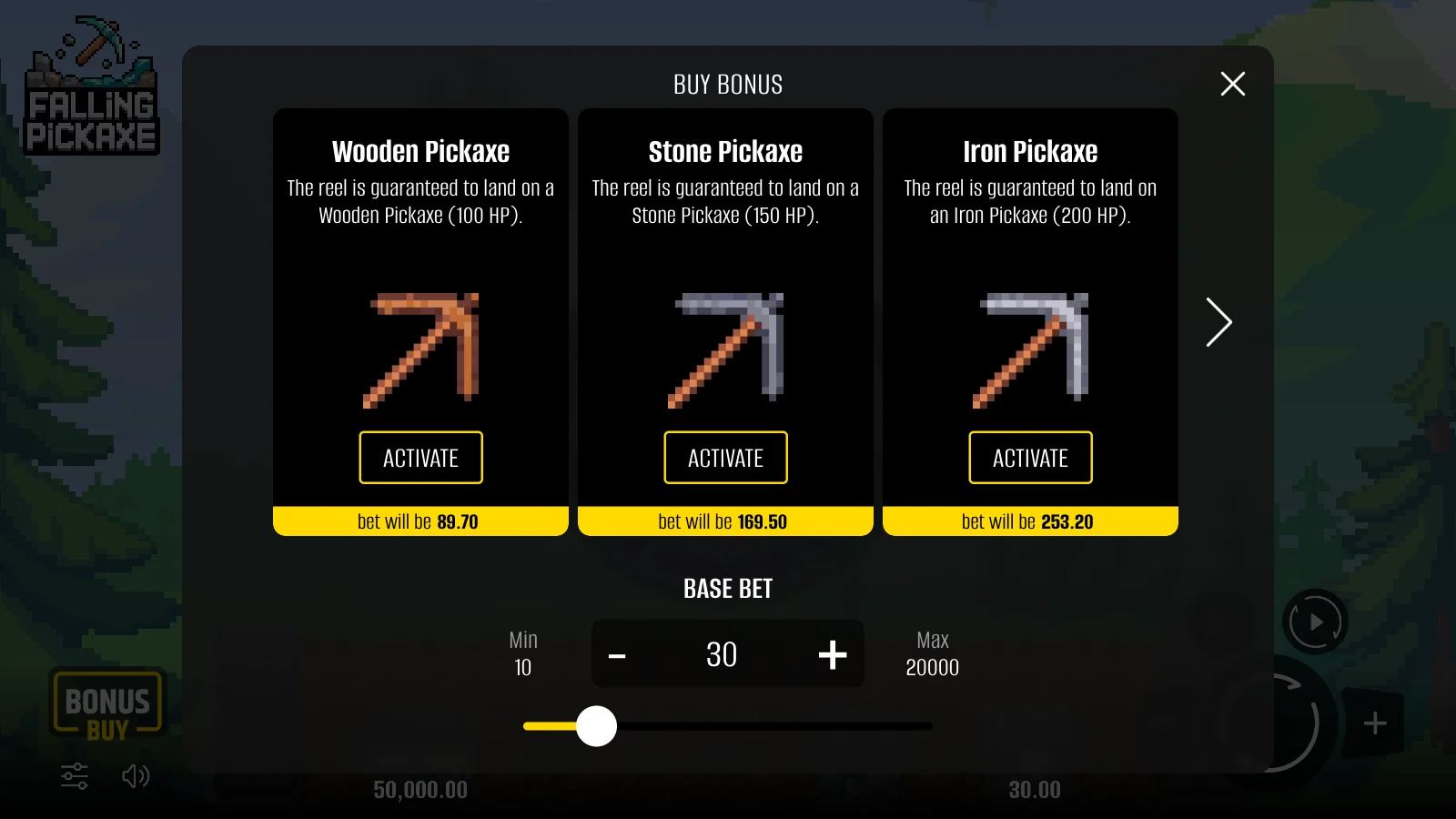
Nowhere else in the client are those two numbers written down. You can walk the stepper to each end and read them off, which takes about fifteen presses, or you can open a screen that is trying to sell you something.
What a Demo Session Costs You
A demo session costs nothing in money and more than you would think in time, so set a limit before you start. A round at turbo speed takes about 2.6 seconds by our log, and autoplay will take 1,000 of them off your hands without asking again.
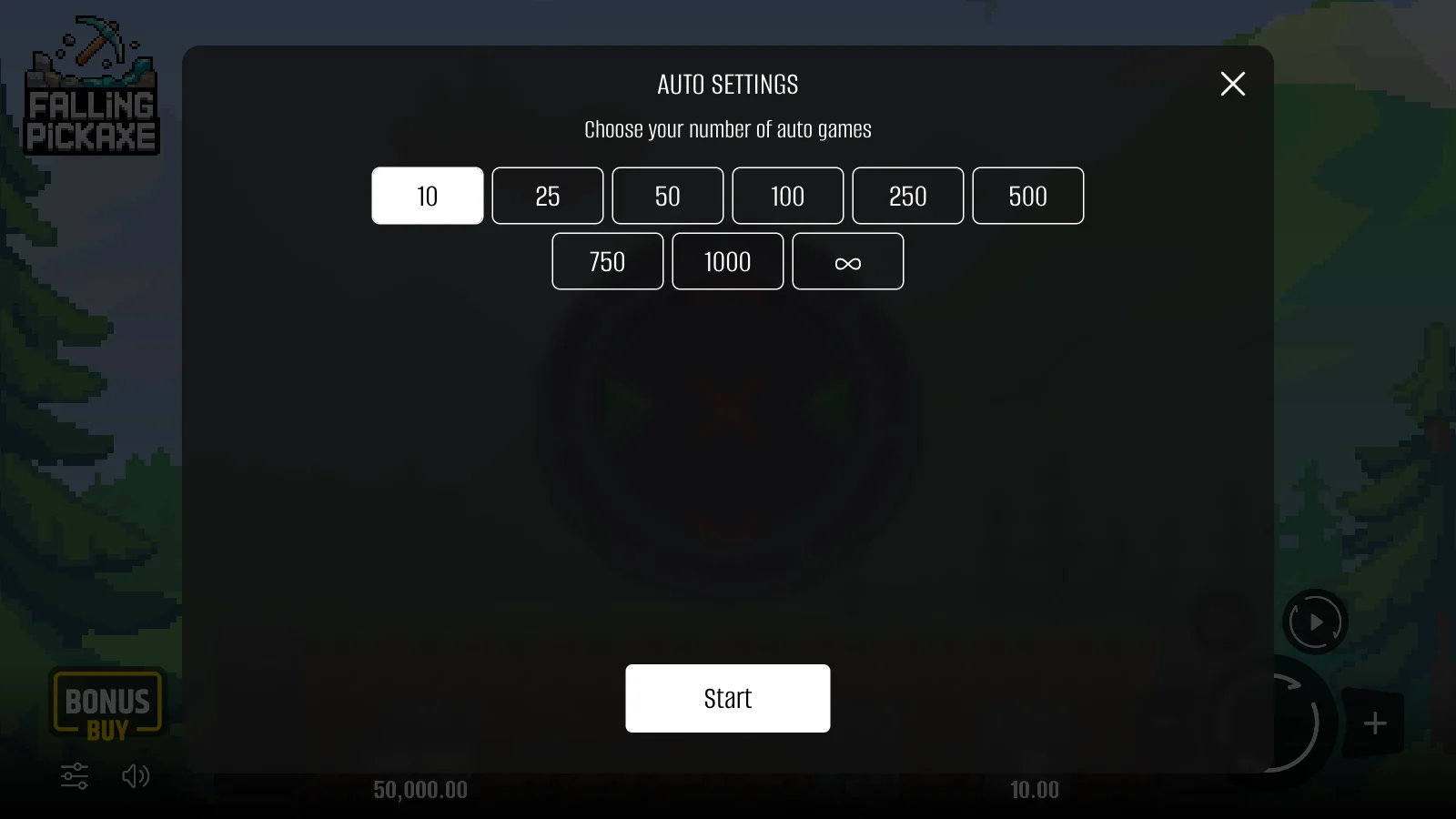
The autoplay panel is the part we would change. It offers 10, 25, 50, 100, 250, 500, 750, 1,000 and an infinity symbol, and it leaves out a loss limit and a single-win stop. The engine behind the game supports those controls, because its shared string table contains the labels for win and loss conditions, yet this build shows none of them.
Logging 500 Rounds of It
The 500-round run took about twenty minutes, and 259 of those rounds were logged one by one. We ran the session on with the stake pinned to 10.00 and turbo on, and the recorded part of the log puts a round at roughly 2.6 seconds. The balance moved from 50,000.00 to 49,601.80.
| Measurement from one session | Value |
|---|---|
| Date played | |
| Rounds under autoplay | 500 at a fixed 10.00 stake |
| Total staked | 5,000.00 |
| Balance, start to close | 50,000.00 down to 49,601.80 |
| Returned over the session | 4,601.80, or 92.0% |
| Rounds logged one by one | 259 |
| Of those, rounds that paid anything | 62, or 23.9% |
| Rounds returning less than the stake | 234, or 90.3% |
| Best single round | 43.16 times the stake |
Reading the rounds back is the part worth copying. The client talks to the game server over an encrypted channel, so we logged what the client itself decoded, which gives the stake, the payout, the round seed and the internal counters for 259 consecutive rounds.
Where the Demo Runs, and Where It Stops
It runs on the maker's own page, in a frame, on a separate demo domain. It runs in a browser and nowhere else: anything offering an installer under this name belongs to one of the other games that share it.
That also means the demo cannot be bookmarked usefully. The client is handed a single-use token when the page opens it, so the address in the frame expires rather than keeps.
Key Terms Used on This Page
- Play money
- The demo balance, labelled DMO and set to 50,000.00 at launch, which cannot be withdrawn or converted.
- Durability
- The hit budget of the pickaxe you are dealt, from 100 points on Wooden to 400 on Diamond.
- Turbo
- The client toggle that shortens the fall animation; with it on, our log puts a round at roughly 2.6 seconds.
This site takes no deposits and runs no identity checks; both stay off it entirely.
Related Reading on This Game
More on this game, from the same section first:
 Guides
How a Round Works
Five outcomes, four pickaxes, 100 to 400 HP
 Guides
The Four Buys
Four buys from x2.99 to x10.50 stake
 Guides
The CNC Check
28 casinos and 3 bingos on the CNC list
 Reviews
500 Rounds Tested
92.0% returned over 500 demo rounds
 Reference
The 95% Figure
RTP 95%, printed nowhere in the game
 Reference
The Ceiling Dispute
x160 on the page, x165 in the release
 Reference
Five Games, One Name
Open-source original dates from 22 March 2025
 Reference
Licence Questions
Licence ALSI-202410066-FI2, read 14 Oct 2026
What Else Do Readers Ask?
Everything below came out of the demo itself on , including the screens we looked for in vain and the numbers the client keeps back.
Is the demo really free?
Yes. The balance is play money labelled DMO, it stays inside the client, and the game asks for neither an account nor a card.
Does the demo ask my age?
No. The client loads straight from the maker's game page, with neither an age check nor a warning screen in front of it.
What currency does the demo use?
None that spends. The balance is labelled DMO, it starts at 50,000.00, and nothing in the client names a real currency anywhere.
What stake does the demo start on?
The demo opens on 30.00, which is the default stake. The ladder runs from 10.00 to 20,000.00 in fifteen steps.
Can I buy the bonus in the demo?
Yes, all four doors work. At a 30.00 base stake they cost 89.70, 169.50, 253.20 and 315.00.
Does the demo show the RTP?
No. Every screen in the client leaves the return figure out, although the game server quietly sends 95% for each of the four bonus-buy doors.
How do we test a demo like this?
We run the maker's client, log every reply the game server sends, read the rules screen end to end and compare it with what the maker publishes.